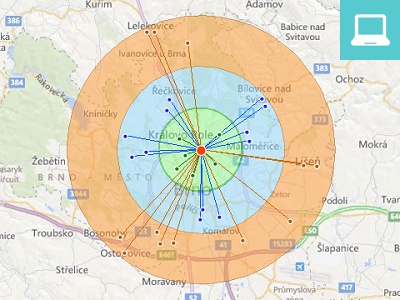
MapInfo Pro is extremely flexible and can be easily integrated with your current IT systems. It is also extremely user-friendly so you don’t need to be an IT expert to use it.
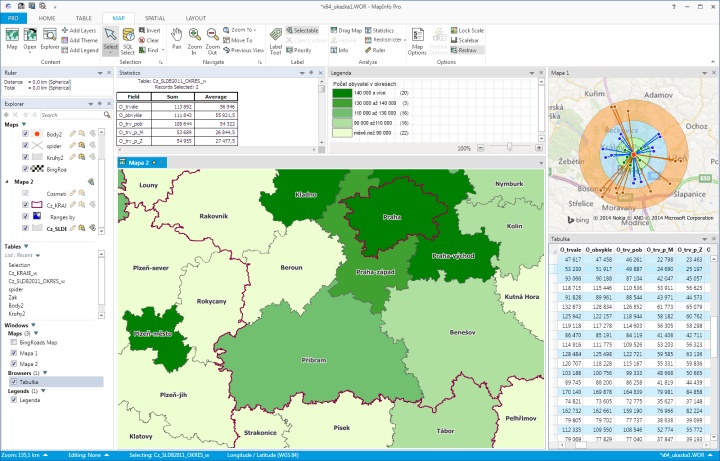
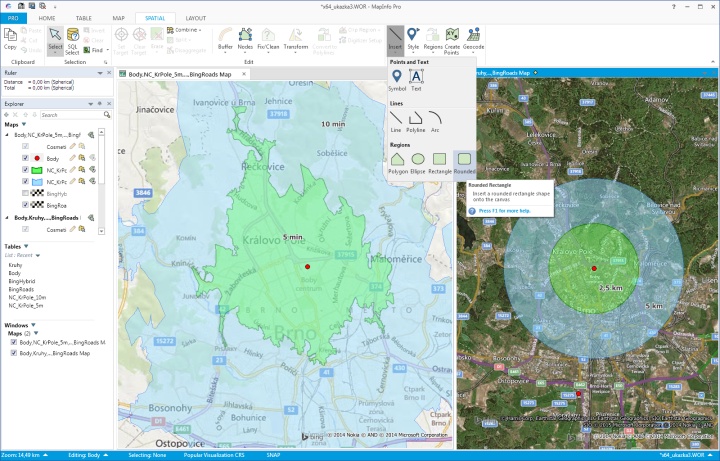
The standard version of MapInfo Pro uses a 64-bit architecture, the user interface is modern and easy to learn. This version contains most commonly used functionality, such as access to a variety of data and map formats, creating thematic maps, SQL queries, editing functions, regions redistricting, exporting maps and data, table structure management etc. This version contains also a number pre-installed add-on tools such as MapCAD, Distance Calculator, Spider Graph and many more. This is the most commonly used version of the application.
User interface corresponds with world leading software vendors. All functions are organized in tabs on the main ribbon. japan's seasons
Brief and complete help is available for beginners. Experienced users can save time with keyboard shortcuts. This is "peak" tourism season; prices for accommodation
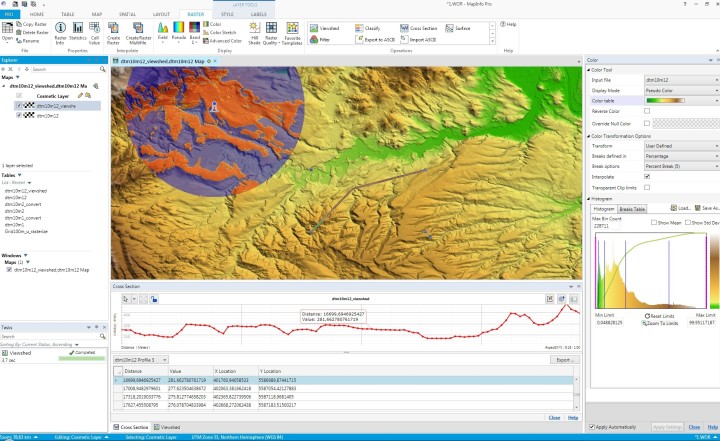
MapInfo Pro™ Advanced builds on MapInfo Pro™ introducing a highly performant raster grid analysis solution, featuring an innovative grid data format called Multi-Resolution Raster (MRR). It enables the super-fast processing, visualization and analysis of high resolution grid and image data; providing a step change in performance and usability even when working at a continental or global scale. From the hanami (flower-viewing) parties of March to
More information
MapInfo Viewer is a free application that allows users to work with workspaces that have been created in the full version of MapInfo Pro. Free registration of the user account is required to use the application. MapInfo Viewer (since version 17.0.2) is based on the same code as the full version of MapInfo Pro, so the user interface is the same. Map compositions can be viewed, users can save maps to PDF/images, Layer Control allows to switch on/off the layers etc.
More information
This is "peak" tourism season; prices for accommodation can double, especially during the Golden Week holiday in late April/early May. Summer (Natsu): June – August
[Your Name/Institution] Date: April 14, 2026
In much of the temperate world, seasons mark practical transitions: planting, harvesting, heating. However, in Japan, the passage from haru (spring) to natsu (summer), aki (autumn), and fuyu (winter) constitutes a national aesthetic ideology. From the hanami (flower-viewing) parties of March to the kōyō (autumn leaf) pilgrimages of November, Japanese culture systematically celebrates ephemeral natural events. This paper asks: How have Japan’s geographic and climatic realities been transformed into a system of cultural meaning, and how is that system responding to contemporary environmental stress?
Autumn / 秋 (September to November) Following the sweltering summer, autumn arrives to cool things down and blanket the nation in a... Mobal Japan's seasons: cherry blossom and beyond - Audley Travel Japan's rainy season typically hits the mainland in June and with it comes more than 80% humidity. Temperatures average around 25°... Audley Travel Japan's seasons: cherry blossom and beyond - Audley Travel By Japan specialist Laura Japan's location between mainland Asia and the Pacific brings it dramatic contrasts in weather and disti... Audley Travel For Everything There is a Season: Japan’s Solar Terms - musubi kiln Nov 1, 2024 —
Japan’s seasons are neither natural nor purely social. They are a co-production—a dance between monsoon climates and centuries of poetic attention. As the dance destabilizes, Japan faces a question relevant to all seasonal cultures: Can we preserve a sense of temporal beauty without the environmental stability that gave it birth? The answer may lie in adapting mono no aware to a new truth: the beauty of seasons now includes the sorrow of their unravelling.
Knowledge Community connects everyone with specialists across Pitney Bowes organization to encourage the exchange of ideas, information and to ask product-related questions.
Knowledge CommunityUseful add-on applications for MapInfo Pro that you can download and install for your license.
ToolsThis is "peak" tourism season; prices for accommodation can double, especially during the Golden Week holiday in late April/early May. Summer (Natsu): June – August
[Your Name/Institution] Date: April 14, 2026
In much of the temperate world, seasons mark practical transitions: planting, harvesting, heating. However, in Japan, the passage from haru (spring) to natsu (summer), aki (autumn), and fuyu (winter) constitutes a national aesthetic ideology. From the hanami (flower-viewing) parties of March to the kōyō (autumn leaf) pilgrimages of November, Japanese culture systematically celebrates ephemeral natural events. This paper asks: How have Japan’s geographic and climatic realities been transformed into a system of cultural meaning, and how is that system responding to contemporary environmental stress?
Autumn / 秋 (September to November) Following the sweltering summer, autumn arrives to cool things down and blanket the nation in a... Mobal Japan's seasons: cherry blossom and beyond - Audley Travel Japan's rainy season typically hits the mainland in June and with it comes more than 80% humidity. Temperatures average around 25°... Audley Travel Japan's seasons: cherry blossom and beyond - Audley Travel By Japan specialist Laura Japan's location between mainland Asia and the Pacific brings it dramatic contrasts in weather and disti... Audley Travel For Everything There is a Season: Japan’s Solar Terms - musubi kiln Nov 1, 2024 —
Japan’s seasons are neither natural nor purely social. They are a co-production—a dance between monsoon climates and centuries of poetic attention. As the dance destabilizes, Japan faces a question relevant to all seasonal cultures: Can we preserve a sense of temporal beauty without the environmental stability that gave it birth? The answer may lie in adapting mono no aware to a new truth: the beauty of seasons now includes the sorrow of their unravelling.